


Why Do We Produce in Greenhouses?
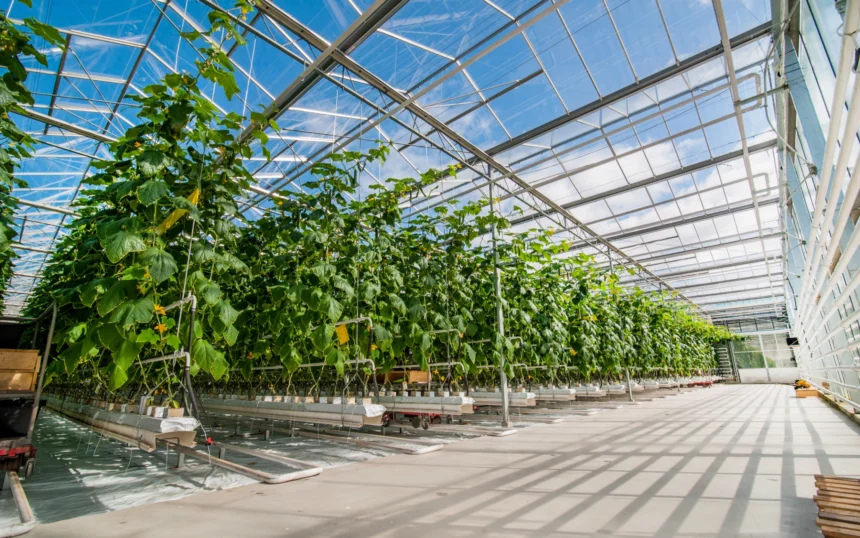
Technological Greenhouses: The Gateway to the Future of Agriculture
Technological greenhouses, as one of the most significant innovations in modern agriculture, offer numerous important advantages over open-field farming. They bring smart solutions to the challenges faced by traditional agriculture, enabling a sustainable and efficient production model.
Increased Efficiency and Quality
Technological greenhouses create an ideal growing environment for plants through sophisticated climate control systems. Factors such as temperature, humidity, light, and CO₂ levels are kept completely under control. This allows for production 365 days a year, regardless of seasonal conditions. While product quality and yield fluctuate in open-field farming due to weather uncertainty, greenhouses ensure a standardized and high-quality product. This provides both income stability for farmers and reliable products for consumers.
Efficiency in Water and Resource Management
Thanks to smart irrigation and fertigation systems, plants receive the precise amount of water and nutrients they need. This results in water savings of up to 80% compared to open-field agriculture. Furthermore, managing weeds and pests is easier in an enclosed environment, which reduces the use of chemical pesticides and results in healthier products.
Resilience Against Climate Change
While global warming and extreme weather events directly threaten open-field agriculture, technological greenhouses eliminate these risks. They provide protection against external factors like heavy rain, hail, drought, and sudden temperature changes, preventing harvest losses. Thus, they offer a critical guarantee for food security.
Maximum Yield in Limited Spaces
Technological greenhouses, where innovative approaches like vertical farming can be implemented, enable high yields even on small plots of land close to urban centers. This shortens the distance food travels from farm to table, reduces the carbon footprint, and allows consumers access to fresher products.
In summary, technological greenhouses offer a superior model to open-field farming, both economically and environmentally, by combining controlled environments, resource efficiency, and climate resilience. This innovative approach forms the foundation of future food production.